Jonas Johansson is an anywhere-based artist, educator, and designer from Glommen, Halland. His work explores light and technology through play, community, and (un)human intervention.
Since 2024 Jonas plans courses for Svenska Tecknare, taught Visual Communication at Beckmans (2017–2025), served as Industry Leader at Hyper Island (2014–2022), and have lectured at Aalto University, Konstfack, School of Machines, Berghs, Nyckelviken, Futuregames, to name a few.
Jonas's professional experience includes KRAM/WEISSHAAR (SE/DE), FIELD (UK) and Moment Factory (CA). He interned at W+K Tokyo (JP) and UltraSuperNew (JP).
Under the moniker Scenic Route, he has performed for artists such as La Fleur, Kornel Kovacs, Gesafellstein, Yuksek and all time idol, The Field.
Today, Jonas runs the artist residency Visualia, produces the fulldome film festival Dome Dreaming, co-creates events with PLX, collaborates with the lighting collective Svartljus, and co-founded Nordic Audiovisual Artists. He shares a studio in Stockholm with SMASH and Rose Hallgren.
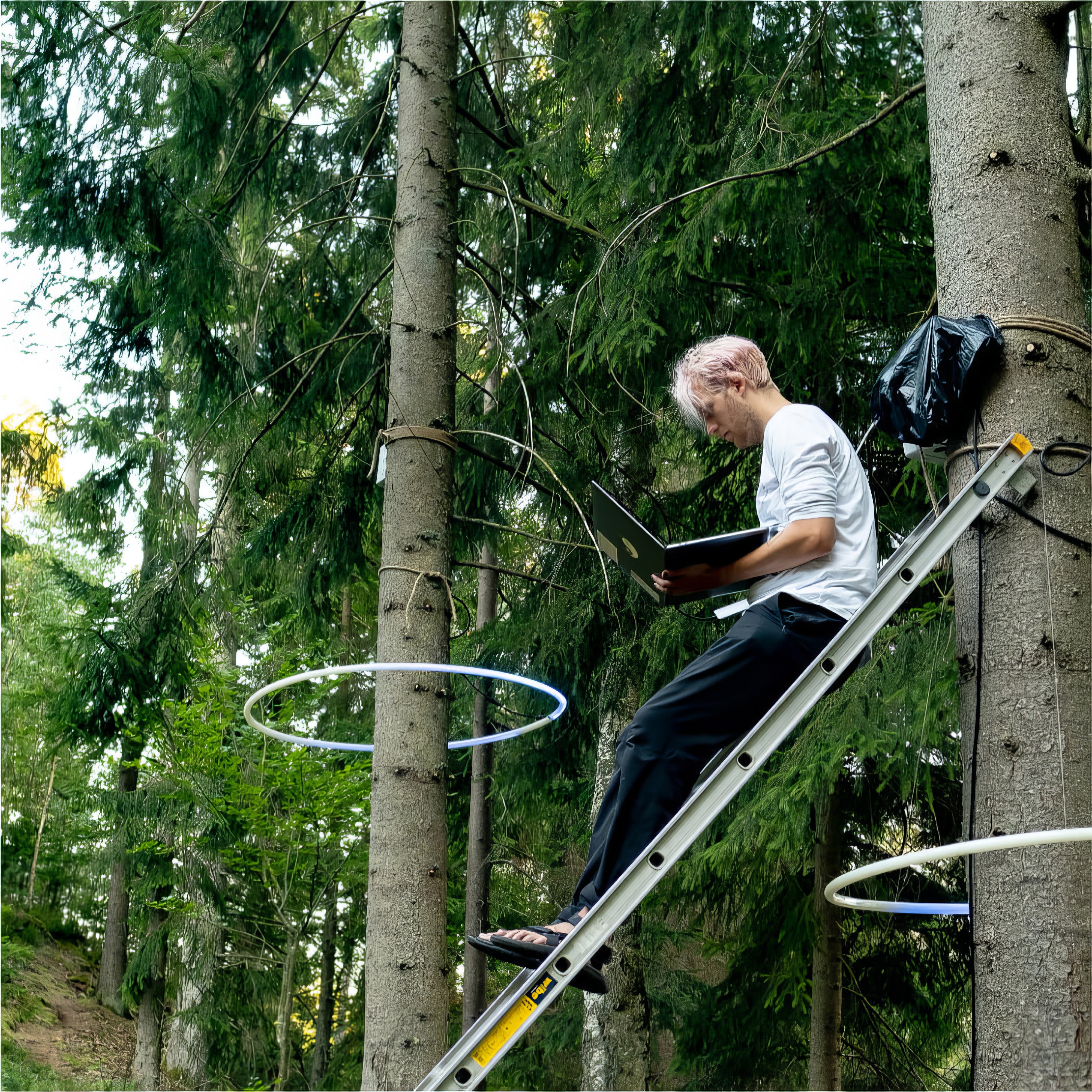
Harpa
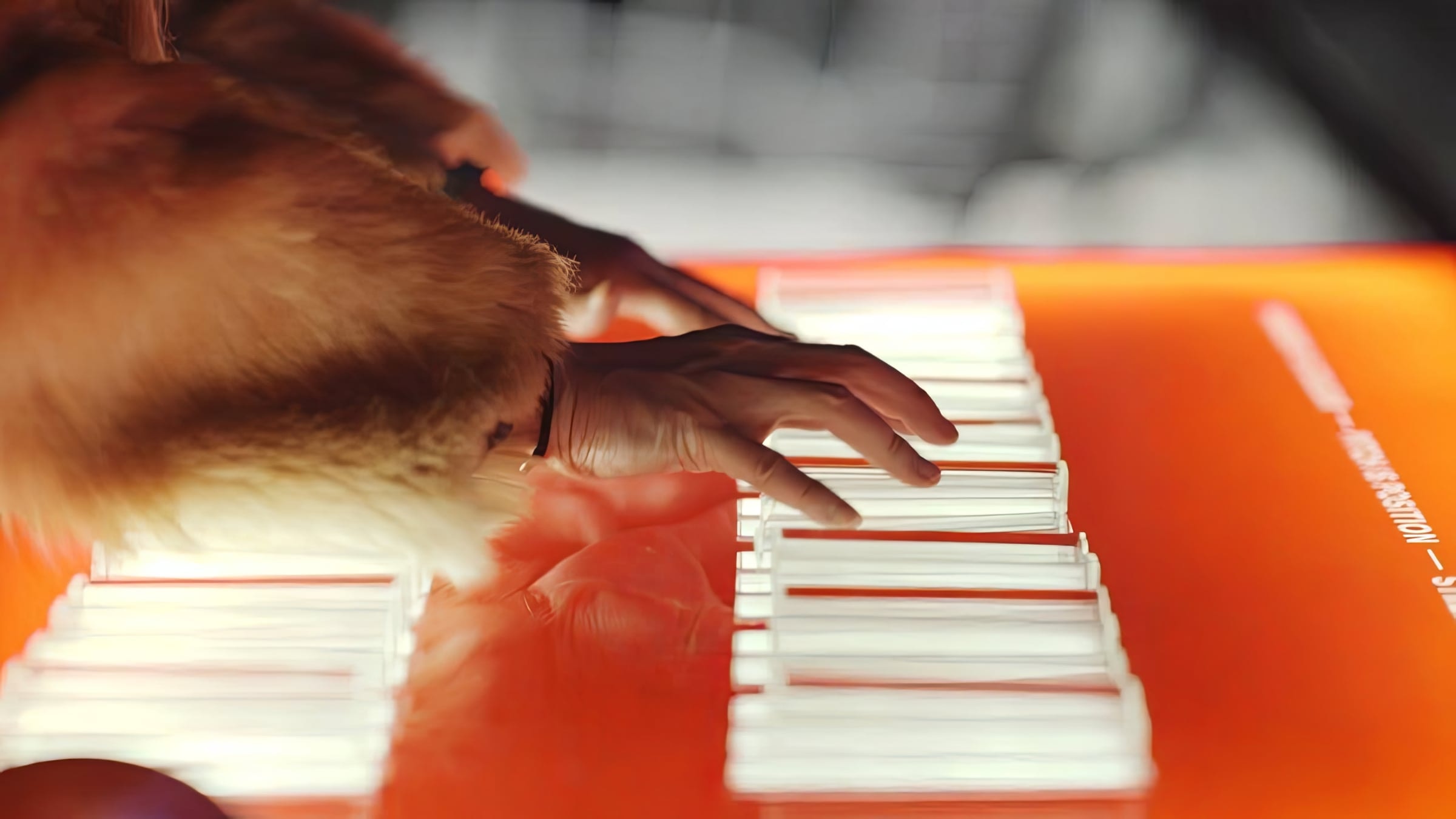
A series of interactive interventions on the LED facade of Harpa Concert Hall in Reykjavík, during Sónar Reykjavík and other occasions.
It started in 2014 when Atlí Bollason and Owen Hindley turned Harpa's 43-metre tall, almost 100-metre wide facade into a publicly playable game of Pong. Launched on Menningarnótt (Culture Night) on 23 August 2014, it was the first time Ólafur Elíasson granted another artist access to the 714 LED panels embedded in the south facade's steel-and-glass quasibrick structure. Anyone with a smartphone could join a Wi-Fi network and take control of a paddle on the building.
After the success of Pong, Harpa and the Sónar organisers invited Atlí and Owen back for the festival in 2015. I was working at FIELD.io at the time, where Owen would freelance, and that's how I got involved. Rather than simply re-run Pong, we turned the entire building into an audio-reactive light show, taking the music being played inside and using it to drive the visuals outside. We reached out to creative developers across Europe, and ended up with over 12 visual responses from 8 artists.
I coded visualisations and animations for the facade, and took on much of the project management, from writing funding applications to running meetings and coordinating the group. The scale was hard to grasp. Harpa is an enormous building set against the harbour in a small city, and when your animation fills that facade it's visible across half of Reykjavík.
In 2016 we took it further and built a light organ on the 4th floor balcony, overlooking the geometric glass front and the downtown area. Visitors could play the building like an instrument. Harmony was colour, pitch was position, strength was brilliance. In 2017 we did a series of interactive installations using hardware from Teenage Engineering and Flic, giving the festival audience direct control of the facade. We called it Sónarspil.
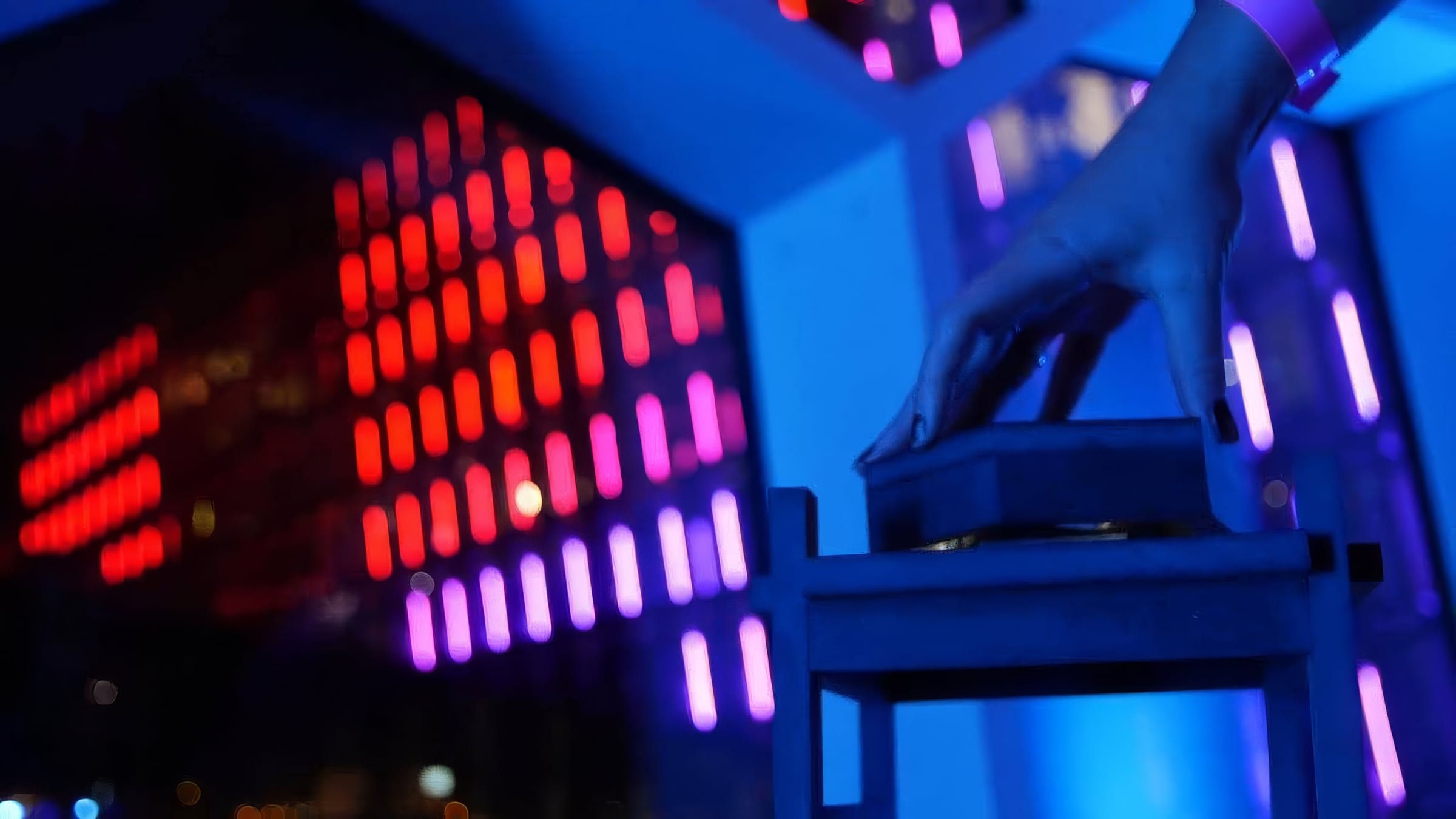
Rose Hallgren built the physical wood and concrete models used as tactile interfaces, and Johanna Tano did the hardware coding. We had funding from the Nordic Culture Fund through their Opstart grant.
In 2019, as Tiny/Massive, we opened the facade to artists worldwide during the Reykjavík Winter Lights Festival. Loney Dear performed a live concert controlling the visuals with Teenage Engineering's OP-Z, ten storeys of light on the harbour, driven from inside a city bus.
It was a great few years. We would gather in Reykjavík for Sónar, hack the facade, have morning meetings in the pool, and enjoy playing with lights in the evenings. The work with Harpa became the spark for NAVA (Nordic Audiovisual Artists), a community where Atlí, Owen, myself and artist Rasmus Stride formed the collective that would go on to do projects like Tiny/Massive and Skaðablót.